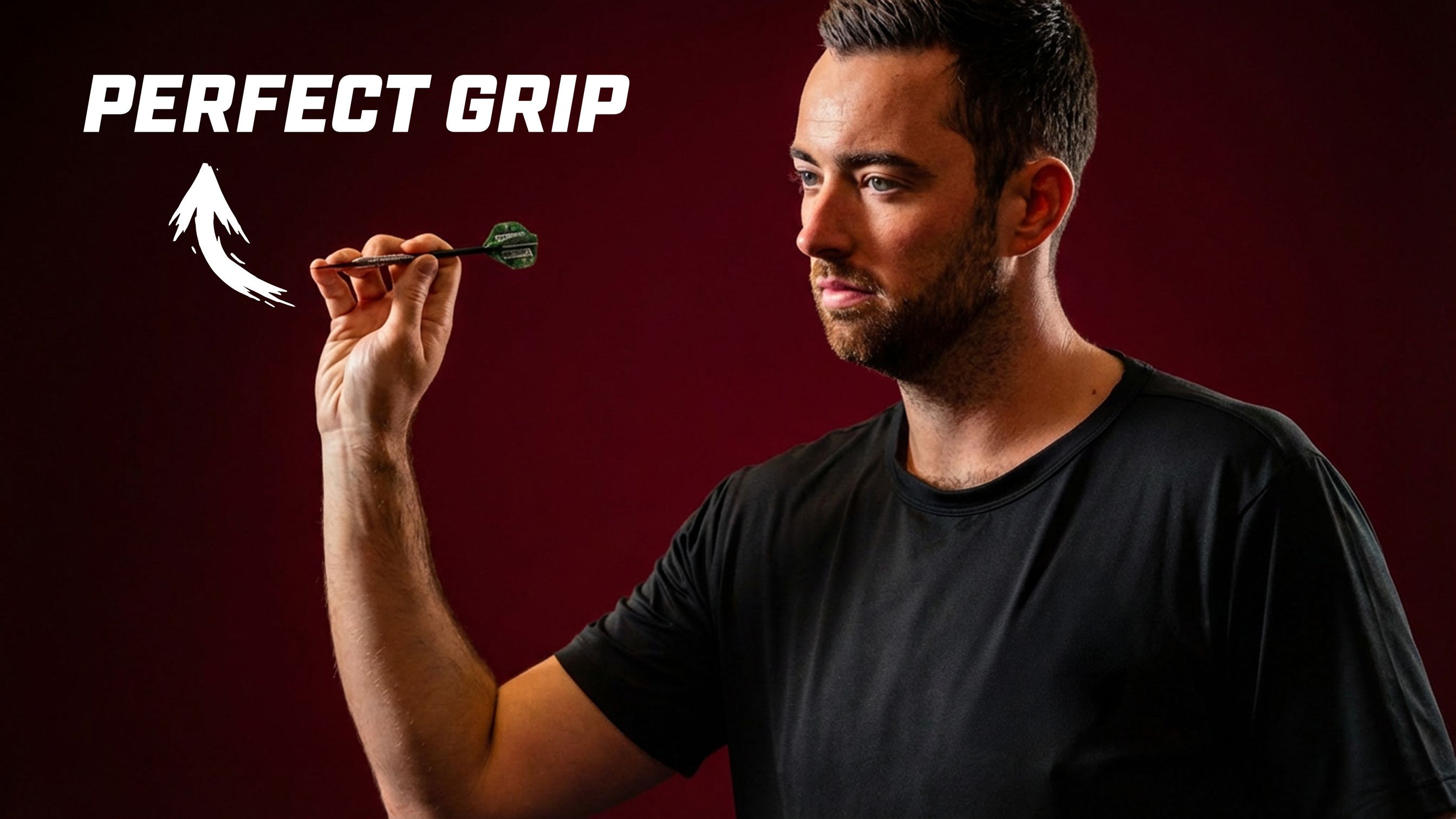
How do you improve your dart stance and position at the oche?
31/03/2026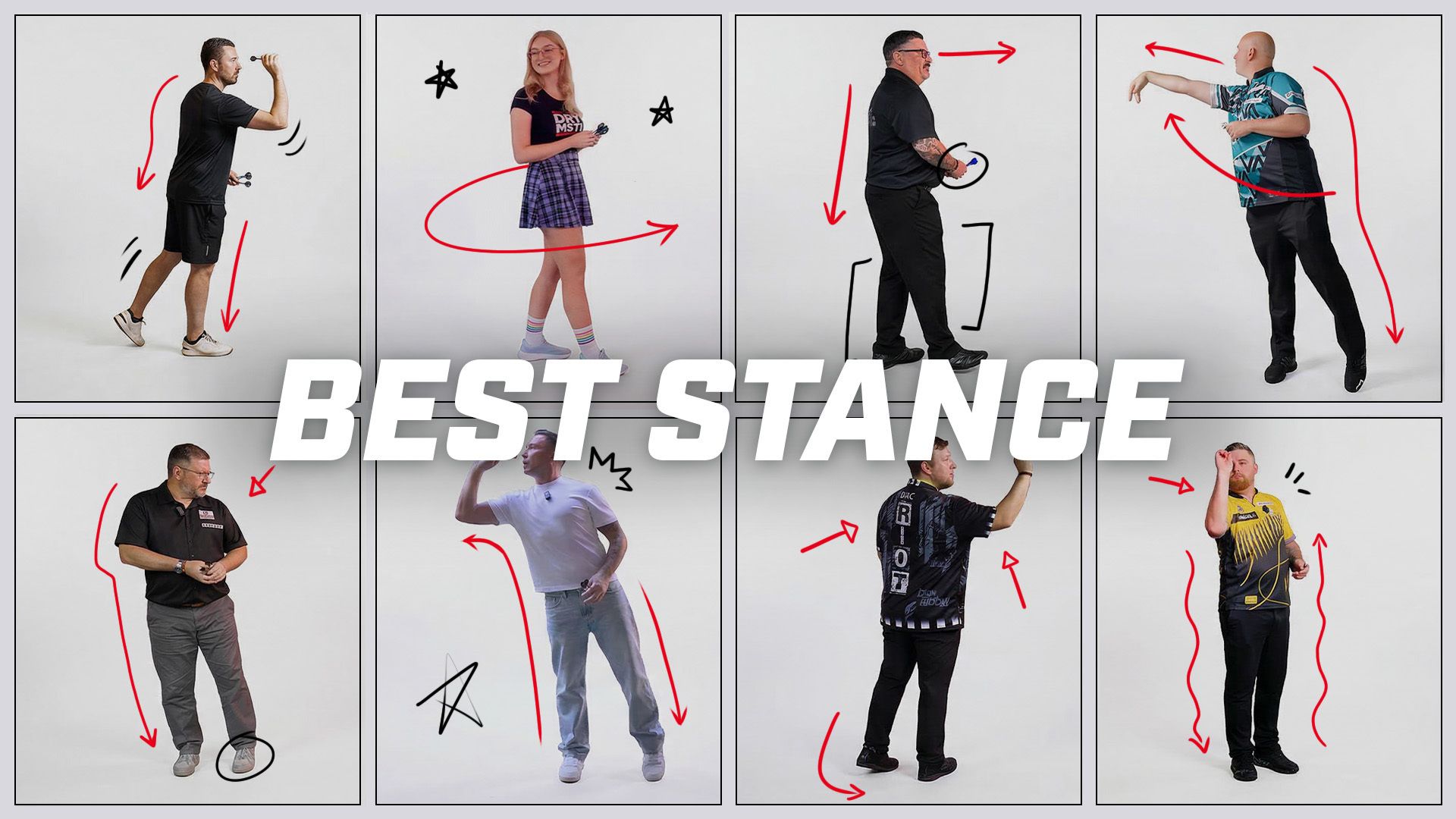
Quick answer: A good dart stance starts with your front foot on an imaginary line from treble 20 through the bull to treble 3, your weight on your front hip and a slightly raised back heel. Most professional players, including Luke Humphries and Gary Anderson, use this basic setup for maximum repeatability. Focus on a relaxed, stable stance that you can replicate identically every throw.
Your darts, grip and throwing technique usually get the most attention. But the foundation of every consistent throw is your stance: how you stand at the oche. If your position is off, you compensate during the throw without realising it.
In this article you will learn step by step how to build your dart stance, from position and foot placement to balance and common mistakes.
Where should you stand at the oche?
The ideal position is directly in front of the centre of the dartboard. A widely used guideline, applied by Paul Lim among others, is to place your front foot on an imaginary line from treble 20, through the bull, to treble 3. By standing centred, doubles on the left and right feel equal and your aiming process becomes simpler.
If you stand too far to the left or right, your perspective on the board changes. Some segments appear further away, which disrupts your rhythm and timing. Players like Gerwyn Price sometimes deviate from the centre, but for most players a centred position works best.
How should you place your feet when playing darts?
After your position at the oche, foot placement is the next step. Top players like Luke Humphries and Damon Heta show that small details make a big difference here. The ideal base: your front foot is planted firmly on the ground with toes pointing slightly forward. Your back foot supports, with a slightly raised heel. Around 60 to 70 per cent of your weight sits on your front hip.
Lifting your back heel creates a natural forward motion during the throw. According to Wayne Mardle, a flat back foot causes your body to move backwards, disrupting your flow and making your throw less consistent.
How do you maintain balance without tension when playing darts?
A good dart stance is stable but never forced. Many players stand too tense: they try to stay as still as possible and create blockages in their movement. Gary Anderson shows how it should be done: upright, relaxed and with a smooth arm movement.
The most important rule is that your stance must be repeatable. If you feel muscle pain in your shoulder or back after three legs, you are standing too tense. A good stance feels effortless, even after a long match.
What mistakes do darts players make most often with their stance?
The four most common mistakes are: not standing centred at the oche, keeping the back foot completely flat, choosing a stance that is too wide or too narrow, and overthinking during the throw. These mistakes mean you have no stable base and constantly need to correct.
A recognisable pattern in your misses often points to a stance problem. If you consistently miss the same doubles on one side, you are probably not standing centred.
Does the ideal dart stance differ for beginners and advanced players?
Yes. Beginners do best by starting as simply as possible: a centred position, stable foot placement and a fixed routine. This ensures quick progression. Advanced players can add small variations, such as a slight body rotation or an adjusted foot position, as Gerwyn Price does.
The difference is not in technique but in control. Advanced players can deliberately deviate because their foundation is already automatic. Beginners who experiment too early actually lose consistency.
How do you test whether your own dart stance is correct?
Ask yourself three questions: do doubles on the left and right feel the same? Do you stand exactly the same way every visit? Do you have a recognisable pattern in your misses? If the answer to any of these is no, that is your biggest area for improvement.
Film yourself during a practice session and compare your stance during the first and the last leg.
Watch the video and apply it directly
In the video below, you will learn how to improve your dart stance, how to position yourself at the oche and how professionals use balance and weight distribution.
You will see exactly how small adjustments in your stance lead to more control and consistency in your throw.
Frequently asked questions about dart stance and position at the oche
A good dart stance is the foundation of every consistent throw. Stand centred, shift your weight to your front hip, keep your back heel slightly raised and maintain a relaxed position you can repeat every visit.
Want to improve your technique and equipment further? Browse the full range.
related blogs
Best beginner darts in 2026
Dart tips: height and distance of your dartboard